


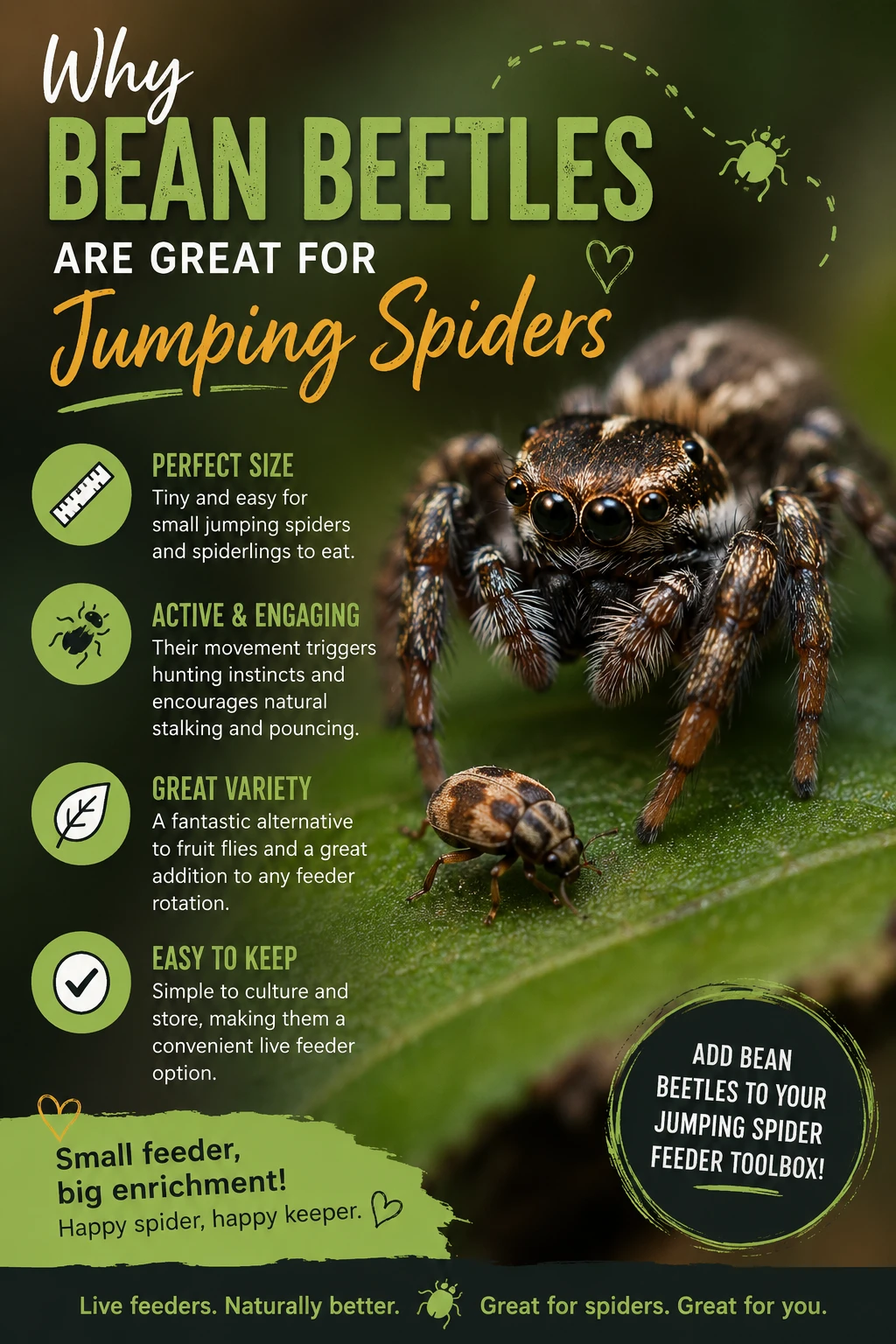
Why Bean Beetles Are a Great Feeder for Jumping Spiders ?️?
Posted by ABDragons Feeders on 27th Aug 2026
If you own a jumping spider, you already know that feeding time can be one of the most entertaining parts of keeping these tiny hunters. Watching a jumper notice its prey, slowly stalk it, and finally make the leap is fascinating!
But finding live feeders that are small enough, active enough, and easy to offer can sometimes be challenging.
That’s where bean beetles come in.
Bean beetles (Callosobruchus maculatus) are tiny, active insects that can make a great addition to the feeder rotation for many jumping spiders.
What Are Bean Beetles?
Bean beetles are very small beetles that develop inside dried beans before emerging as adults.
Because adult bean beetles are only a few millimeters long, they can be an especially convenient live feeder for smaller exotic pets—including many jumping spiders.
Instead of having to deal with feeders that quickly become too large for your spider, bean beetles provide another small-prey option to keep on hand.
Their Small Size Is Perfect for Little Hunters
One of the biggest challenges with jumping spiders is finding appropriately sized prey.
Jumping spiders can take surprisingly large prey for their size, but that doesn't mean bigger is always better. Offering appropriately sized feeders can make hunting easier and safer—especially for smaller or younger spiders.
Bean beetles are particularly useful for smaller jumping spider species and growing juveniles that aren't ready for larger crickets, roaches, or other feeders.
Very tiny spiderlings may still require smaller foods, such as fruit flies, so always choose prey based on the size of your individual spider.
They Encourage Natural Hunting Behavior
Jumping spiders are visual hunters.
That's one of the reasons live feeders are so much fun to offer. Movement gets their attention and gives them an opportunity to use their incredible eyesight and natural hunting abilities.
Bean beetles move around the enclosure, giving your spider the chance to:
-
Spot its prey
-
Stalk and position itself
-
Pounce
-
Capture a moving target
-
Display natural hunting behaviors
It's food and enrichment at the same time!
A Great Alternative to Fruit Flies
Fruit flies are a staple feeder for many small jumping spiders, but bean beetles can give you another option as your spider grows.
Having multiple appropriately sized feeders available can help keep feeding interesting and provide variety instead of relying on the exact same insect every time.
Bean beetles can be especially convenient for spiders that have started outgrowing tiny fruit flies but still aren't ready for larger feeders.
Variety Is Important
We love bean beetles, but that doesn't mean they need to be the only thing on your jumping spider's menu.
Using a variety of appropriate live feeders is a great way to offer different sizes, movements, and nutritional profiles.
Depending on the size and species of your jumping spider, a feeder rotation might include fruit flies, bean beetles, small fly larvae or flies, appropriately sized roaches, crickets, or other suitable insects.
Think of bean beetles as another great option for your jumping spider feeder toolbox.
❤️ Small Feeder, Big Fun
Jumping spiders may be tiny pets, but they have huge personalities—and feeding them is one of the best ways to watch those personalities come out.
Bean beetles offer a combination that's hard to beat: small size, lots of movement, and an opportunity for natural hunting behavior.
Whether you're looking to add some variety to your jumper's diet or need a feeder for that awkward stage between tiny fruit flies and larger insects, bean beetles are definitely worth considering.
Your little eight-legged hunter might just have a new favorite!
Looking for tiny live feeders for your jumping spider? Give bean beetles a try and add some variety to feeding day.
Always select feeders appropriate for the size and species of your jumping spider. Remove uneaten prey when necessary and research the specific feeding requirements of your species.